

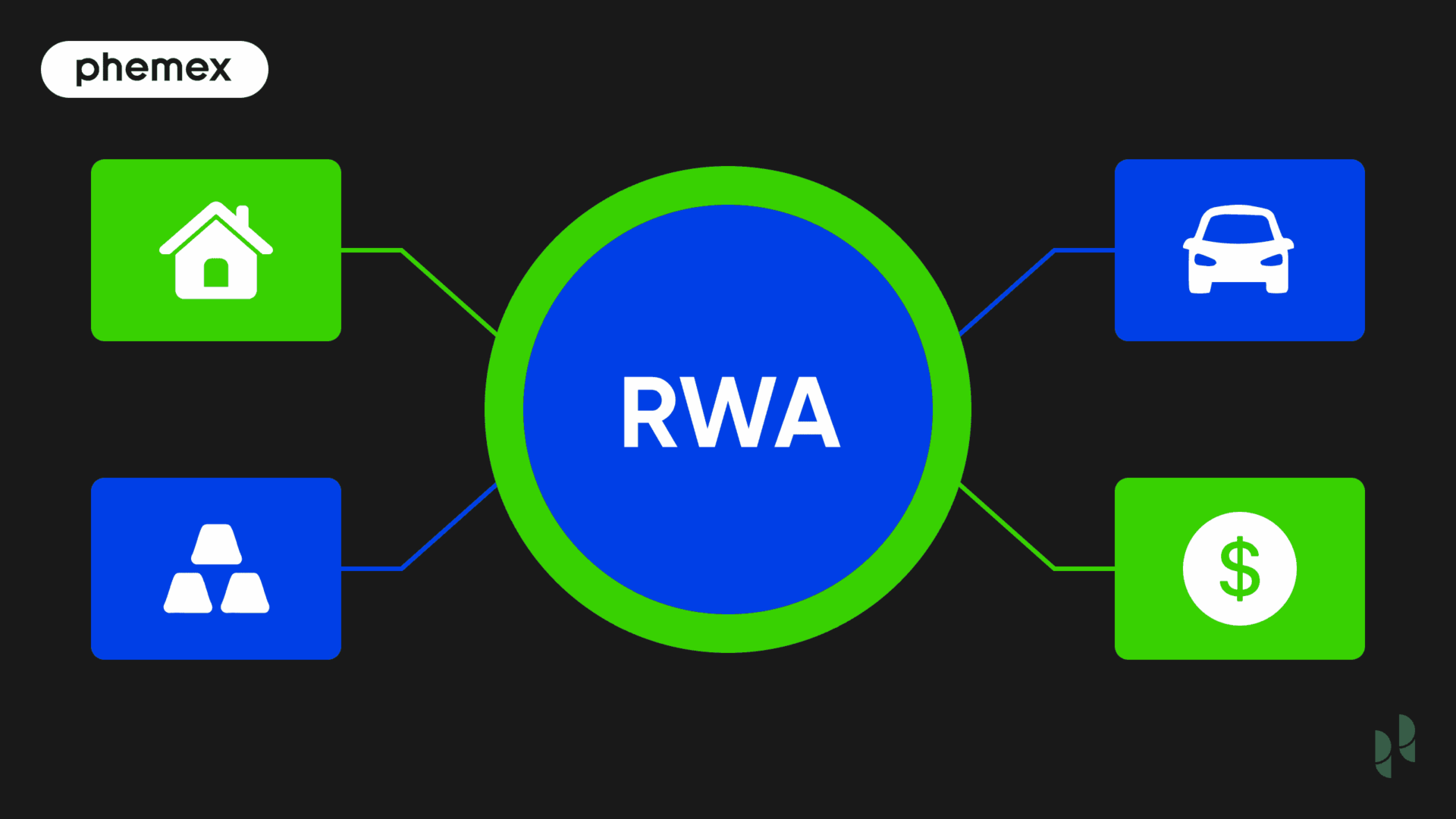
For years, decentralized finance was seen as a world built almost entirely on digital abstractions—tokens, yield farms, smart contracts, automated markets, and algorithmic financial experiments that rarely touched real-world value. But that era is shifting. A new wave is sweeping across the DeFi landscape, bringing with it something traditional investors understand deeply: real, tangible, measurable assets.
Welcome to the RWA revolution—a transformation that is quietly rewriting the rules of crypto, finance, and global markets. And unlike past hype cycles, this shift is backed by fundamentals, institutional interest, and trillion-dollar potential.
A New Era: When DeFi Meets Real-World Value
Real-world assets (RWAs) represent physical or traditional financial assets—like treasury bills, invoices, real estate, commodities, or corporate credit—tokenized and brought on-chain. For years, the world of blockchain has tried to merge with traditional finance; RWAs are finally making it happen.
Why is this moment different?
Because RWAs solve the biggest criticism ever thrown at DeFi:
“Where is the real value?”
By letting investors access real yield backed by real assets, RWAs bring legitimacy, stability, and adoption opportunities DeFi has never seen before. No more abstract liquidity loops. No more yield based purely on speculation. This time, value is tied to something that exists outside the blockchain—and institutions are paying attention.
The Catalysts Behind the RWA Explosion
1. High Interest Rates Changed the Game
In a high-interest economic environment, short-term treasury yields rose sharply—making them some of the most attractive risk-adjusted investments available. But traditional access to T-bills is slow, complex, and not globally accessible.
Tokenized treasuries changed that.
Platforms like Ondo, Maple, and OpenEden let investors access U.S. government bond yields on-chain. Within months, tokenized treasuries became one of the fastest-moving segments in crypto, surpassing billions in total value locked (TVL).
When investors saw real returns—3%, 4%, even 5%—that didn’t depend on speculative markets, RWAs suddenly became the most logical on-chain investment.
2. Institutions Want On-Chain Efficiency
Big money is no longer approaching blockchain with curiosity—they’re approaching with intention.
Tokenizing real-world assets gives institutions:
- Faster settlement
- Greater liquidity
- Transparent ownership
- Automated compliance
- Lower operational costs
BlackRock’s digital asset initiatives, JPMorgan’s Onyx blockchain, and real estate tokenization pilots across Europe show one thing: the traditional finance giants are already preparing for a blockchain-powered world.
3. Regulatory Clarity Is Improving
A few years ago, the regulatory environment around tokenized assets was foggy at best.
That’s changing.
Many regions are developing clear frameworks for asset tokenization, including:
- The EU’s MiCA regulations
- Singapore’s Project Guardian
- UAE’s Virtual Asset Regulatory Authority (VARA) initiatives
- U.S. SEC guidance (slow, but improving)
Governments have realized tokenization isn’t a trend—it’s a technological evolution. And as compliance becomes easier, RWAs get more legitimacy.
The Multi-Trillion-Dollar Opportunity No One Can Ignore
Tokenized RWA markets are still early, yet analysts predict the sector could reach:
- $10 trillion by 2030 (BCG)
- $5 trillion within five years (Citi)
Why such huge numbers?
Because tokenization makes sense across nearly every major asset class:
• Real Estate
Fractional ownership, instant settlement, and the ability to unlock liquidity from otherwise illiquid property markets.
• Treasury Bills & Government Bonds
The safest assets on the planet, made accessible to anyone with a crypto wallet.
• Commodities
Gold, carbon credits, and oil reserves—everything from metals to energy—can be fractionalized and traded globally.
• Private Credit
One of the fastest-growing segments, letting businesses borrow using decentralized rails at lower costs.
• Invoices & Trade Finance
Tokenizing corporate debt and receivables turns slow-moving financial processes into high-yield investment products.
RWAs are not just another category—they are the bridge connecting a multi-trillion-dollar global market to the speed, transparency, and efficiency of blockchain.
Why RWAs Are Becoming the Future of DeFi
To understand the real impact of RWAs, you have to understand a simple truth:
DeFi doesn’t need to reinvent finance—it needs to improve it.
And that’s exactly what RWAs do. They make traditional assets:
- easier to buy
- easier to trade
- easier to use as collateral
- easier to verify
- easier to fractionalize
RWAs unlock financial opportunities for millions of people who previously had no access to global-grade investments.
A farmer in India.
A startup founder in Kenya.
A student in Latin America.
Anyone with a crypto wallet can now invest in assets previously reserved for elites or institutions. This is one of the closest things we’ve seen to true financial inclusion.
The Challenges Still Ahead
While RWAs are booming, the sector isn’t without obstacles:
1. Regulation still varies by region.
Different jurisdictions have different interpretations of tokenized assets, slowing global adoption.
2. Custody remains a bottleneck.
Physical assets still need secure, regulated custodians—adding complexity.
3. Trust matters more than ever.
If an issuer claims an RWA token is backed by something, blockchain alone can’t prove it. Audits and transparency are essential.
4. Liquidity is still developing.
Traditional markets are huge; crypto markets are small. Bridging that gap will take time.
Despite these hurdles, the momentum behind RWAs is undeniable.
The Road Ahead: What the Future of RWAs Looks Like
The next phase of the RWA revolution is already forming, and it looks like this:
• Tokenized treasuries will become the foundation of on-chain money markets.
Stablecoins may evolve into yield-bearing RWA-backed assets.
• Major companies will tokenize bonds, stocks, and debt.
Corporate fundraising could move entirely on-chain.
• Real estate will undergo a liquidity renaissance.
Fractional ownership will unlock buy-in for millions of global investors.
• Global trade finance will shift to blockchain.
Invoice-backed tokens will streamline trillions in corporate capital.
• Traditional finance and DeFi will merge.
The line between CeFi, TradFi, and DeFi will blur until they feel like one interoperable system.
RWAs aren’t a trend—they’re the start of a new financial era that fuses old-world assets with new-world infrastructure.
Conclusion: The RWA Revolution Is Here to Stay
As DeFi matures, it’s becoming clear that the future of blockchain isn’t just digital—it’s tangible. Real-world assets offer stability, transparency, and sustainable yield, addressing almost every major weakness that fueled past market cycles.
This time, the growth is not driven by hype—
it’s driven by value.
And as institutions, governments, and global startups embrace tokenization, the RWA revolution will only accelerate. DeFi is no longer just an experiment. It’s becoming the new financial backbone of the world—one real-world asset at a time.
